Attics, garages and kitchen drawers
Mice and rat control in Bartlesville
Scratching above the ceiling after dark, droppings in a drawer or a chewed cereal box mean rodents are using the house. Call an independent local pest control company to talk about trapping and sealing, and leave the droppings unswept for now.
How to tell
- droppings, which CDC describes as pointed at one end and often containing hair
- gnaw marks on food packaging, cabinet edges, wiring or the bottom of a door
- scratching or running in walls, ceilings or the attic, mostly at night
- nests of shredded paper, insulation or fabric tucked into a corner
- greasy rub marks along the route they travel
CDC also notes that gnaw marks on their own may only mean rodents were there at some point. Fresh droppings tell you more about now.
The gaps they use
A mouse can squeeze through a hole the width of a pencil, about a quarter inch, according to CDC. Typical openings:
- where water, gas or air conditioner lines pass through the wall
- under and behind kitchen cabinets
- around floor drains in a utility room
- rafters, gables, eaves and soffits
- worn seals under garage doors
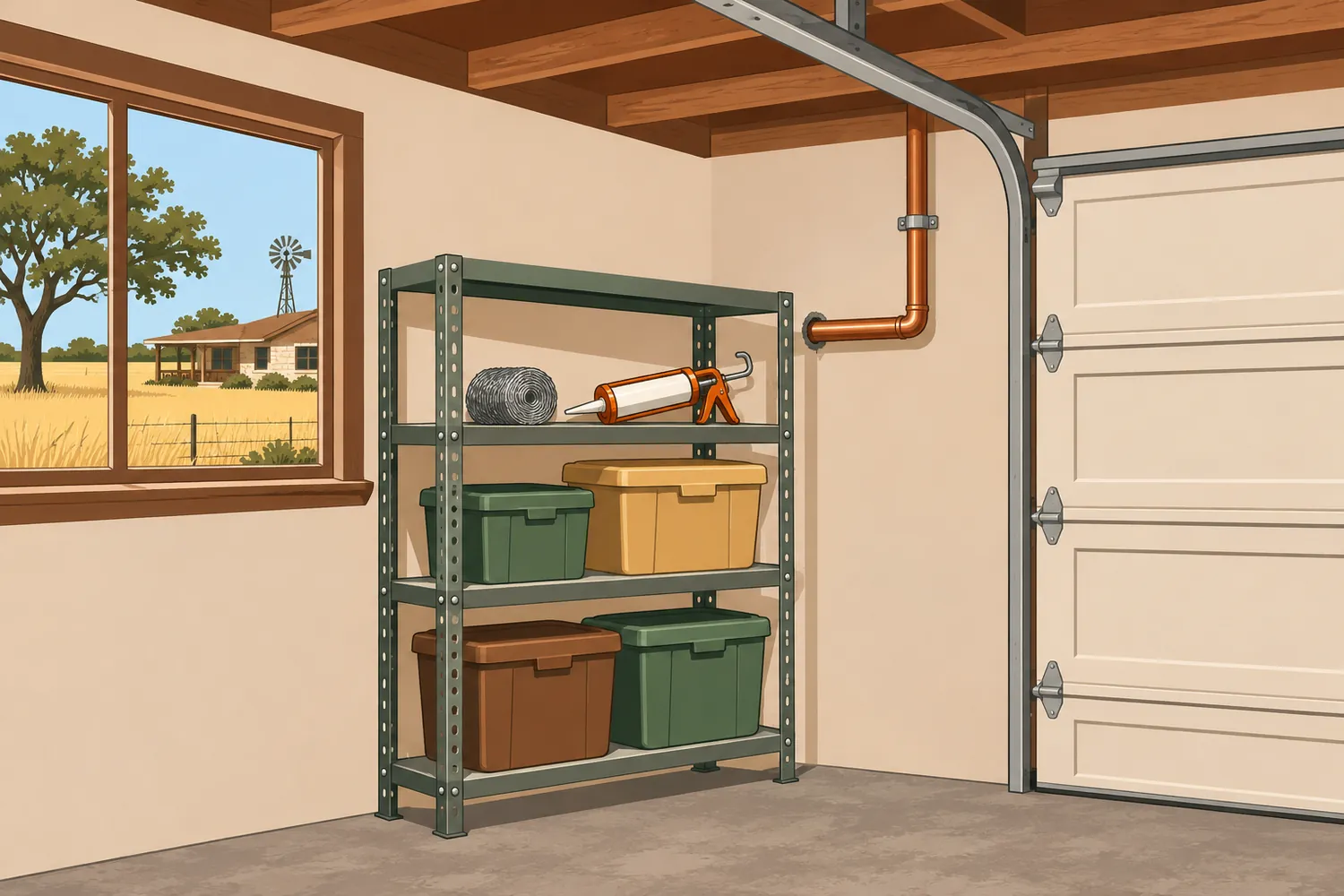
CDC's sealing advice is steel wool with caulk or spray foam over it for small holes, and lath screen, metal sheeting, hardware cloth or cement for bigger ones. Sealing pays off once the animals already inside have been trapped, which is why companies usually pair the two.
Cleaning up droppings safely
CDC says not to sweep or vacuum droppings, urine or nests, which can put particles into the air. Open the doors and windows for 30 minutes first, put on rubber or plastic gloves, soak the mess with a bleach solution or a household disinfectant for 5 minutes, then wipe it up with paper towels and throw them in a covered trash can.
What a rodent visit usually involves
Expect a walk around the outside looking for entry points, then the attic, garage and kitchen. Indoors, most companies rely on traps; outdoors some use locked bait stations. Exclusion, the sealing of entry points, is often quoted separately from trapping.
Ask how often traps get checked, where any bait stations go and how they're secured, and whether sealing is included or priced on its own.
When the cause is next door
Rats and mice shelter in junk piles and long grass. In Bartlesville, the City's Neighborhood Services division enforces property maintenance rules that cover accumulated junk and trash and tall weeds. Staff usually look into a property only after a complaint, which you can file on the division's web form or by calling 918.338.4230.
Before the visit
Food and shelter are what keep rodents around. Take away what you can before the technician arrives.
Rodent checklist
- Move food, birdseed and pet food into sealed containers.
- Keep the trash cart lid shut and the cart away from the garage door.
- Move firewood away from the house; CDC suggests 100 feet and a foot off the ground.
- Clear stored boxes from the garage walls so the base of the wall is visible.
- Note where you hear noises and at what time.
Rodent questions
Should I put out poison myself?
Ask the company first. Indoors, many rely on traps and sealing, partly because a rodent that dies inside a wall is hard to find.
Does it matter whether it's mice or rats?
Yes. Rats need bigger openings and bigger traps, and they nest in different places. Describe the droppings and the sounds as closely as you can.
Will they come back?
They will if the gaps stay open. Trapping clears the house; sealing is what keeps the next ones out.
Something living in the house that shouldn't be?
Describe it on the phone to an independent pest control company that works around Bartlesville. Whether anyone comes out is your call.